A bowing wall is the perched water table pushing, and the fix is sized to the inches
The ridges on Huntsville's east side hold water in the soil above the rock, and after a wet spring that water presses sideways on every basement wall below it. Block walls bow at mid-height, then crack horizontally, then lean at the top. How far the wall has come in decides the repair, so the first visit is a straightedge, a tape and a verdict.
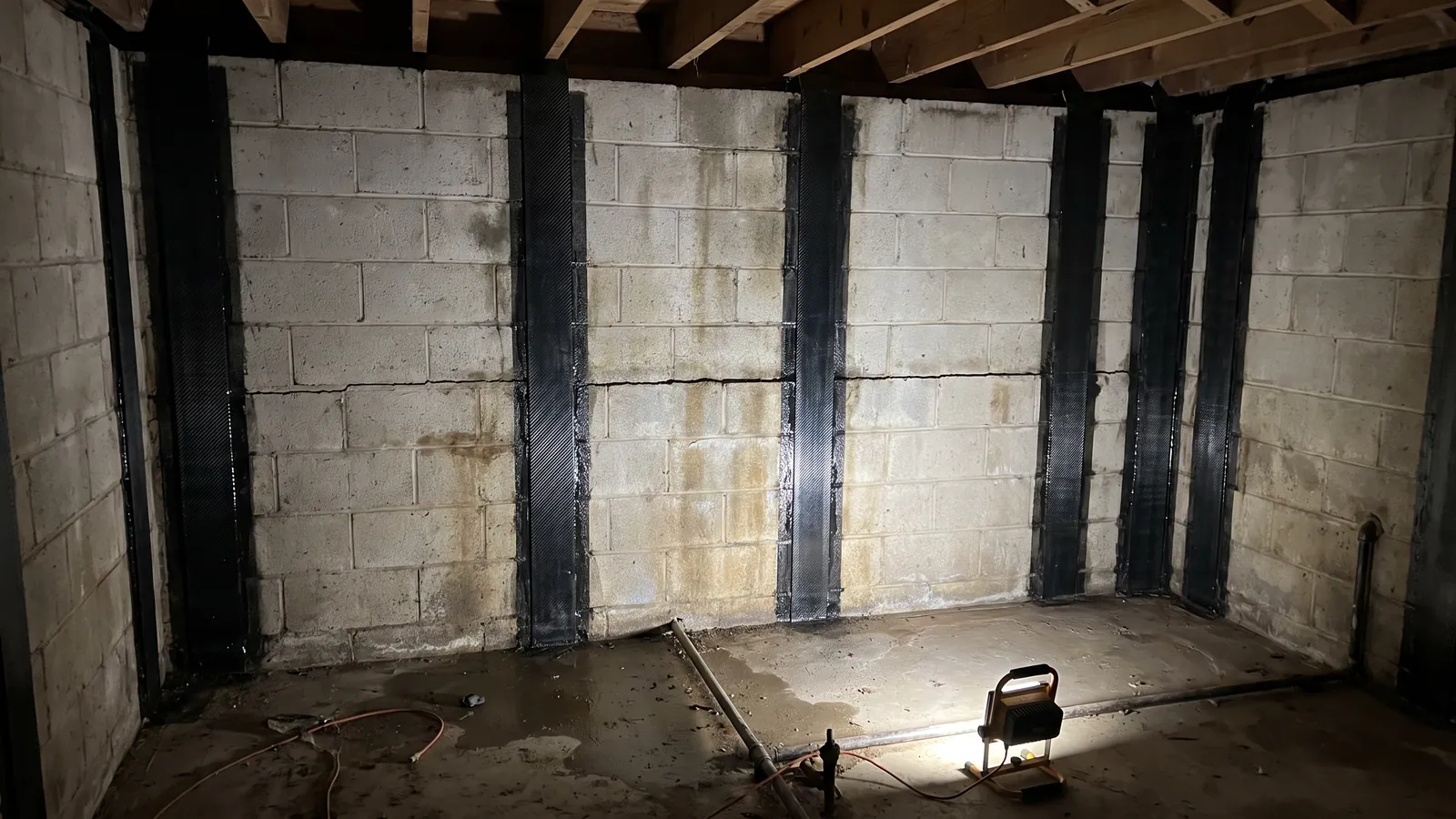
- Under an inch of bow, cracks closed or hairline. The wall is still sound and the job is to stop it moving. Carbon-fiber straps epoxied to the inside face at four- to six-foot spacing carry the tension the block cannot, and nothing is dug.
- One to two inches, horizontal crack open, mortar joints displaced. The wall needs to be held from outside the soil wedge. Steel wall anchors go through the wall to a plate buried in the yard ten feet out, or helical tiebacks screw into the soil beyond the pressure zone; either can be tightened over the following seasons to draw the wall back.
- Past two inches, shear at the base, blocks stepped out of plane. Holding it is no longer enough; the wall is rebuilt in sections with the soil braced, or an interior steel beam system is set to carry the load while the old wall stays as a form. This is the expensive row, and it is why rows one and two matter.
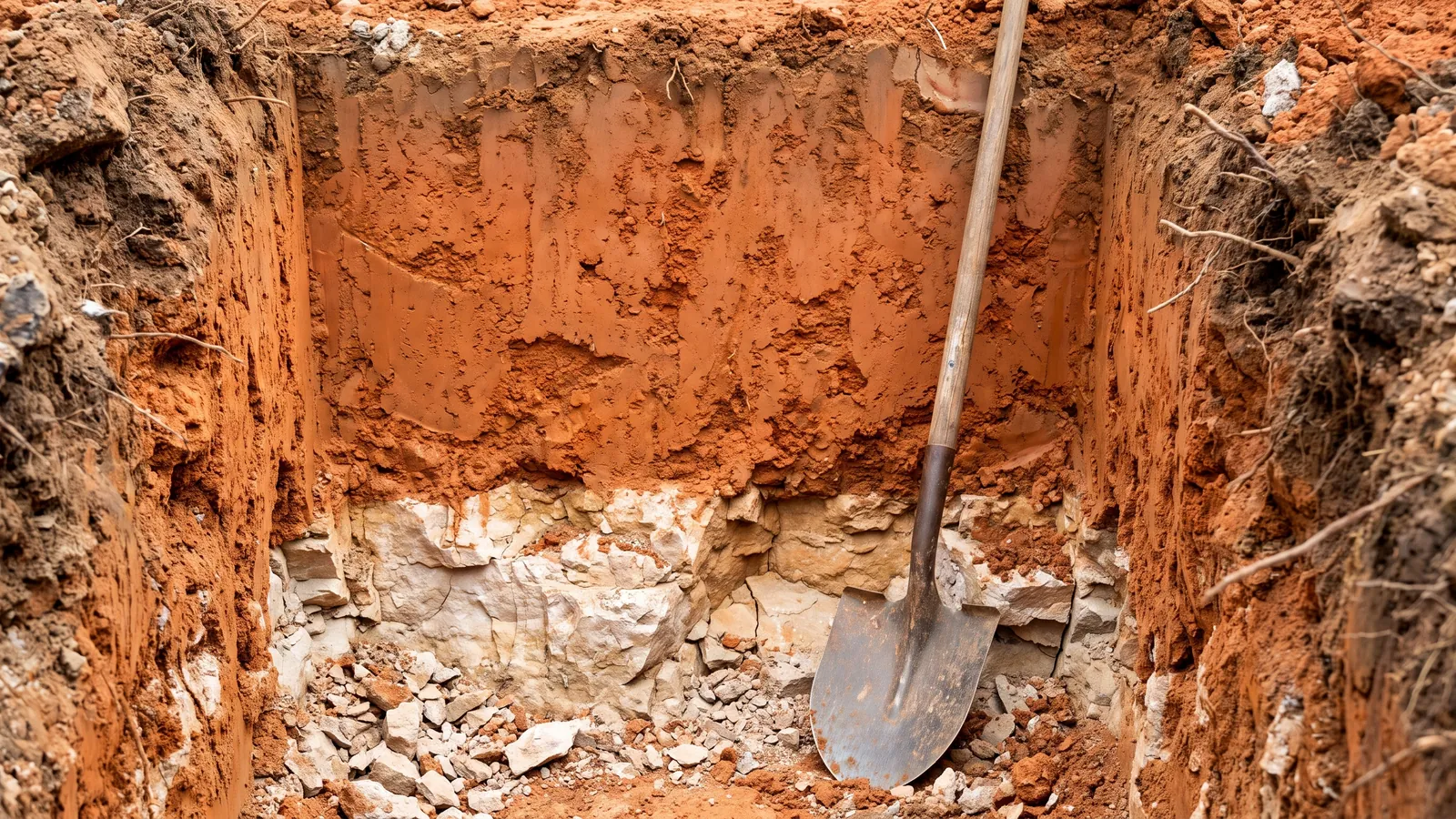
Those three rows are how the inspection sorts a wall, and the measurement is simple: a long straightedge against the inside face, a tape to the deepest point of the bow, photographs of the horizontal crack with a gauge in it, and a plumb line at the top course. Whatever the number, the report also says what is pushing. Almost always in this county it is water. The perched table at the foot of Monte Sano and the east-side ridges rises in April and May and after the late-fall rains, saturated clay weighs nearly twice what dry clay does, and the wall was never designed to be a dam. Downspouts dumping at the wall and a yard graded toward the house add to it; the freeze-thaw cycles a North Alabama winter brings pry at the cracks between seasons.
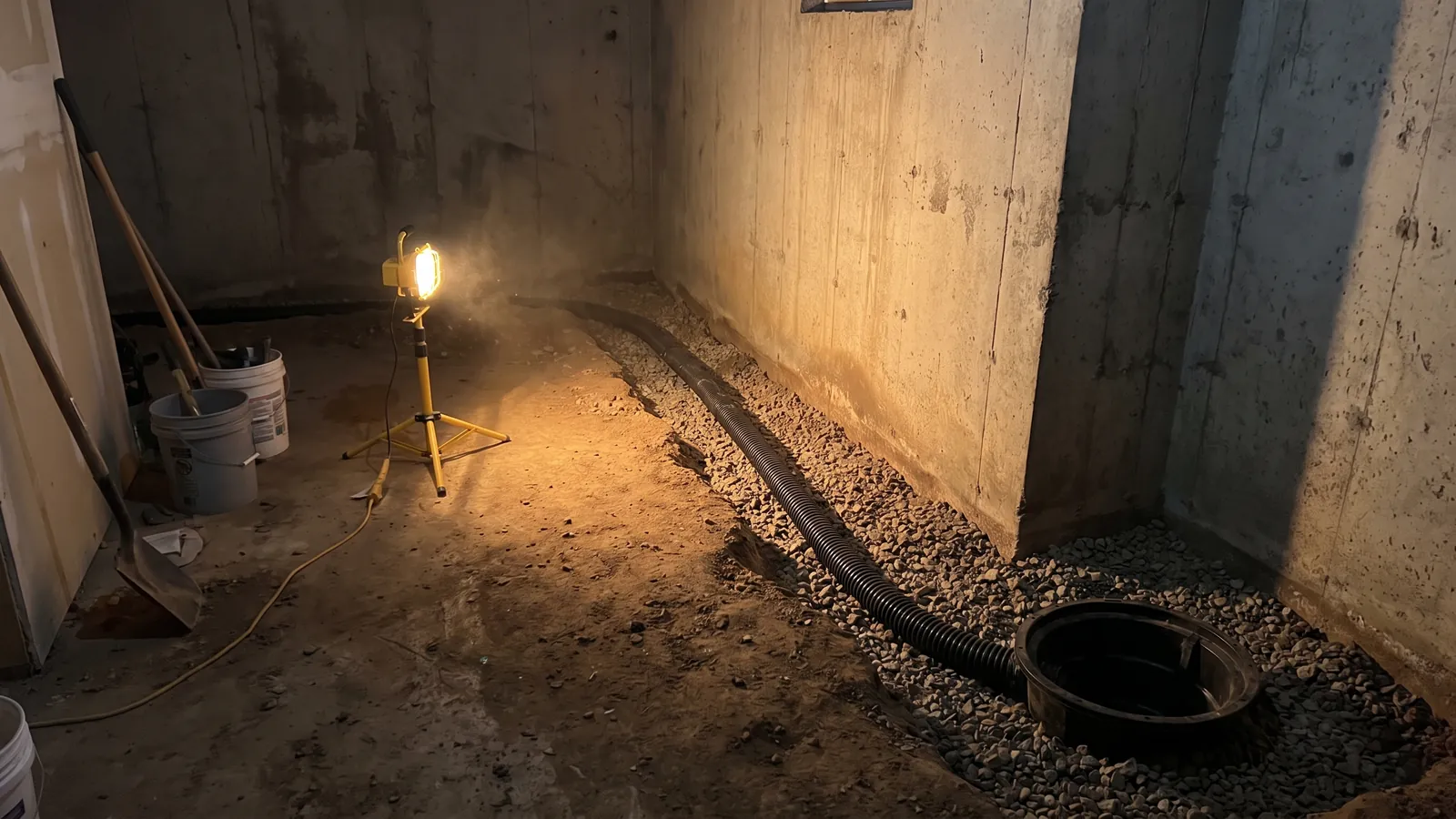
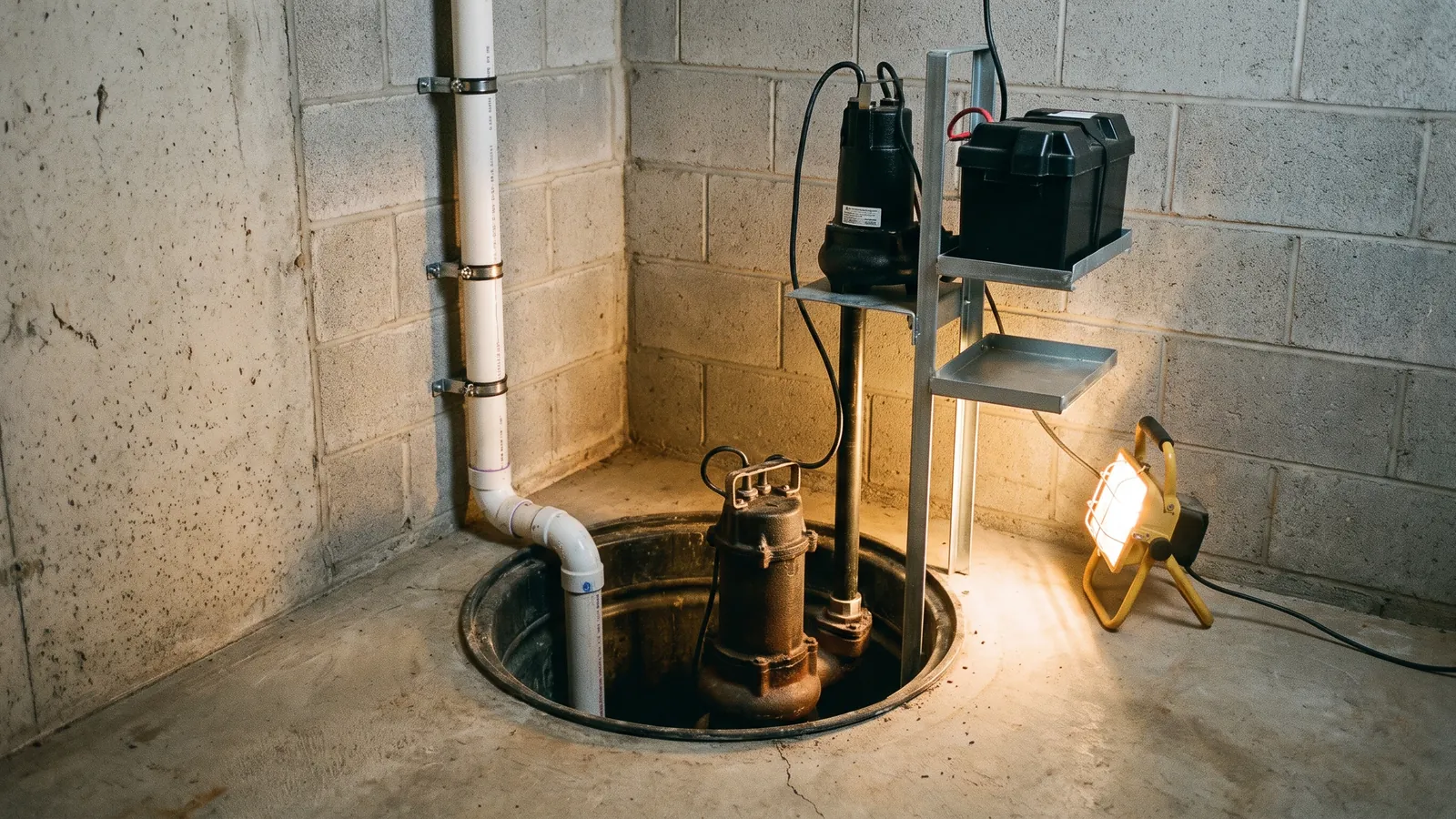
Because of that, no strap, anchor or tieback is priced here without the drainage beside it. Extending downspouts, regrading the first six feet, and in the worse cases an interior drain tile with a sump are what take the load off; the reinforcement is what holds the wall while the load comes off. Anchors and tiebacks have the advantage of being adjustable: a nut on the inside plate is turned a quarter turn each dry season, and over two or three years a wall that leaned an inch and a half can come most of the way back. Carbon fiber does not pull a wall back; it freezes it where it is, which is the right thing to do with a wall that has not moved far.
Wall anchors and tiebacks are structural work and are permitted through City of Huntsville Building Services inside the city, and the anchor plates go into a yard that Alabama 811 has to mark first. A job of several anchors or any rebuilt section crosses the $10,000 line for Alabama's residential home builder's licence, so the contractor's HBLB number is on the sheet. Carbon-fiber straps alone are usually below both thresholds, and the sheet says so when they are.
What this work includes
Bow measured, not guessed
Straightedge and tape at the deepest point, gauge across the horizontal crack, plumb at the top course, all photographed and written on the report.
Three repairs, matched to the inches
Carbon-fiber straps for walls under an inch; wall anchors or helical tiebacks for one to two inches; sectional rebuild or steel beams past that.
Anchors that keep working
Wall anchors and tiebacks are tightened a little each dry season, drawing the wall back over two or three years instead of leaving it where it stopped.
The water dealt with
Downspout extensions, regrading and, where the table is high, interior drain tile with a sump are priced with the wall, because the wall is only the symptom.
Yard put back
Anchor plates go in through small holes ten feet out; sod is lifted and relaid, and the trench for a tieback is backfilled and compacted.
Permits and the licence
City of Huntsville Building Services permit for anchors, tiebacks and rebuilds, Alabama 811 locates for the yard work, HBLB number on the sheet for jobs of $10,000 or more.
Bowing wall repair prices in Huntsville, AL
| Item | 2026 range | What changes it |
|---|---|---|
| Inspection with bow and crack measurements | $0 | Free; readings and photos in the report |
| Carbon-fiber strap, installed | $500 – $900 | Each, spaced 4–6 ft; walls under 1 in of bow |
| Wall anchor with exterior plate | $700 – $1,400 | Each; needs yard access ten feet out |
| Helical tieback | $900 – $1,600 | Each; where the yard cannot take a plate |
| Typical 30 ft wall, anchors or tiebacks | $4,500 – $11,000 | Five to eight units plus drainage |
| Interior drain tile with the wall work | $65 – $110 per ft | See waterproofing |
| Wall rebuild, per section | $2,800 – $6,500 | Soil braced, blocks relaid, waterproofed |
| Seasonal anchor tightening visits | $0 – $150 | First two included; small fee after |
These are 2026 Huntsville-area ranges meant for budgeting, not quotes. The technician measures first and prices the job on site, each item on its own line; nothing is dug, injected or lifted until you have agreed to the sheet, and the sheet holds for 30 days.
From recent jobs
Questions about bowing wall repair
How much bow is too much?
The thresholds the trade uses are about an inch for straps alone and about two inches before a wall has to be rebuilt or carried by beams, with the base of the wall and the state of the mortar joints mattering as much as the number. The inspection gives you the number and the row it puts you in.
Can a bowed wall be pushed back straight?
With wall anchors or tiebacks, gradually, yes. Each dry season the inside nut is tightened and the wall comes in a little. Walls under an inch of bow that get carbon fiber stay where they are, which for that amount of movement is fine.
Why not just dig outside and waterproof?
Exterior waterproofing takes the water off the wall, and in some cases it is the right first job. It does not add strength to a wall that has already cracked and bowed, so on a moved wall it goes with reinforcement, not instead of it.
Is the wall going to fall in?
A wall under two inches of bow with the base intact is not about to fail, and the repair is routine. A wall that has sheared at the bottom course or stepped out of plane needs attention sooner and we will tell you plainly on the day, without drama.
Will this show inside a finished basement?
Carbon-fiber straps are a quarter inch proud of the wall and paint over; anchors leave a steel plate the size of a dinner plate at each unit, which most people box in. Both are explained before you choose.
Do you handle the permit?
Yes. Anchors, tiebacks and rebuilds inside the Huntsville city limits are permitted through City of Huntsville Building Services, and the crew files it and schedules the inspection. The fee is on the sheet. Carbon-fiber straps alone usually need none; the report says if that is your case.